Sozialpsychologie
SozialpsychologieVerantwortungsdiffusion
Diffusion of Responsibility Effect
Weisen Sie Verantwortung klar zu. Wenn jeder verantwortlich ist, handelt oft niemand.
Beliebtheit
Nützlichkeit
Aliasse
Verantwortungsdiffusion / im Zusammenhang mit dem Zuschauereffekt
Bereiche
Sozialpsychologie / Gruppenverhalten / Notfallreaktion / Organisationsverhalten / Ethik / Entscheidungsfindung
Definition
- Verantwortungsdiffusion ist das verringerte Gefühl der persönlichen Verantwortung, das Einzelpersonen empfinden können, wenn andere Personen ebenfalls anwesend sind oder an derselben Situation beteiligt sind. Das APA-Wörterbuch der Psychologie definiert es als ein vermindertes Verantwortungsgefühl, das in Gruppen oder Kollektiven erlebt wird.
Kerngedanke
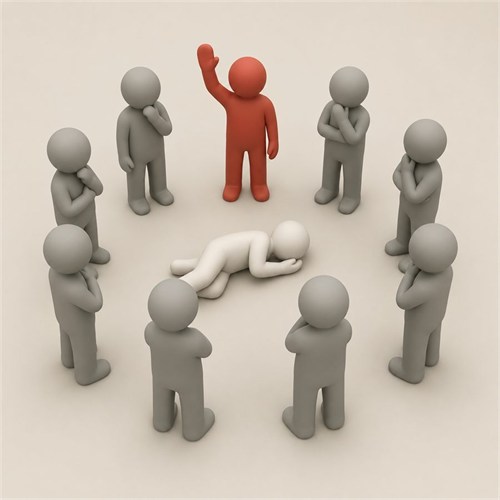
- Wenn Verantwortung von vielen Menschen geteilt wird, kann jede Person das Gefühl haben, dass jemand anderes handeln, entscheiden, berichten, helfen oder die Schuld übernehmen wird.
So funktioniert es
- Eine Person bemerkt eine Situation.
- Sie sehen oder nehmen an, dass auch andere Personen davon wissen.
- Ihre persönliche Verpflichtung fühlt sich schwächer an, weil die Verantwortung als geteilt erscheint.
- Sie können warten, zögern, die Untätigkeit anderer kopieren oder annehmen, dass jemand Qualifizierteres handeln wird.
- In der Zuschauendenforschung beschreibt das Modell von Latané und Darley das Eingreifen als einen mehrstufigen Prozess, der das Wahrnehmen des Ereignisses, die Interpretation als Notfall, das Akzeptieren der Verantwortung, das Wissen, was zu tun ist, und das Handeln umfasst.
Anwendungsbeispiel
- In einem Gruppenchat am Arbeitsplatz meldet ein Kunde einen schwerwiegenden Fehler. Zehn Teammitglieder sehen die Nachricht, aber niemand antwortet, weil jede Person annimmt, dass jemand anderes sich darum kümmert.
Bekanntes Beispiel
- Beispiel: Der Mord an Kitty Genovese im Jahr 1964 wird häufig als ein bekanntes Beispiel im Zusammenhang mit dem Zuschauereffekt und der Verantwortungsdiffusion genannt.
- Warum es diese Regel erfüllt: In der populären Version sollen viele Zeugen nicht gehandelt haben, weil jeder annahm, jemand anderes würde helfen oder die Polizei rufen.
Anwendungsfälle / Situationen, in denen es relevant ist
- Notfallsituationen mit mehreren Beobachtern.
- Gruppenprojekte, bei denen niemand klare Verantwortung hat.
- Unternehmens- oder bürokratische Entscheidungen, bei denen die Verantwortung auf mehrere Abteilungen verteilt ist.
- Online-Communities, in denen viele Menschen schädliche Inhalte sehen, aber niemand sie meldet.
- Ausschüsse, in denen Mitglieder es vermeiden, eine klare Position einzunehmen.
- Sicherheitsvorfälle, bei denen jeder annimmt, jemand anderes habe das Problem eskaliert.
Wann man es nicht verwenden sollte / Häufige Fehlanwendungen
- Verwenden Sie es nicht, um zu behaupten, dass Gruppen immer das Helfen reduzieren; Gruppenidentität, Führung, Normen und klare Rollen können das Helfen erhöhen.
- Verwenden Sie es nicht, wenn eine Person explizite Verantwortung und Autorität hat.
- Verwechseln Sie es nicht mit Faulheit; Zögern kann aus Mehrdeutigkeit, Angst, mangelnder Fähigkeit oder unklarer Autorität entstehen.
- Stellen Sie die Kitty-Genovese-„38 Zeugen“-Geschichte nicht als vollständig verifiziertes Tatsachenbeispiel dar.
Ursprung / Entstehung
- Erfunden von: Im strengen Sinne nicht von einer einzelnen Person erfunden. Das Konzept wird stark mit der Bystander-Interventionsforschung von John M. Darley und Bibb Latané in Verbindung gebracht.
- Erfindungsjahr: 1968 ist das Schlüsseljahr der Veröffentlichung für das klassische Papier „Bystander-Intervention in Notfällen: Diffusion of Responsibility.“
- Land / Ursprungszusammenhang: Vereinigte Staaten; experimentelle Sozialpsychologie und Forschung zum Verhalten von Zuschauern in Notfällen.
Kurze praktische Quintessenz
- Weisen Sie Verantwortung klar zu. Wenn jeder verantwortlich ist, handelt oft niemand.
