Psychologisches Experiment / kognitionspsychologisches Konzept
Psychologisches Experiment / kognitionspsychologisches KonzeptExperiment zur sensorischen Deprivation
Sensory Deprivation Experiment
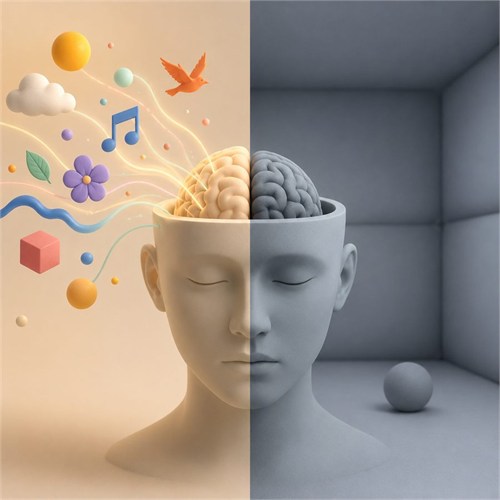
Der Geist braucht einen stetigen Strom vielfältiger Reize, um geordnet und aufmerksam zu bleiben; werden die Reize zu begrenzt oder zu monoton, können Aufmerksamkeit, Wahrnehmung und Denken instabil werden.
Beliebtheit
Nützlichkeit
Aliasse
Experiment zur perzeptuellen Isolation / sensorische Deprivation / Experiment mit reduzierten Sinnesreizen / Restricted Environmental Stimulation / REST
Bereiche
Experimentelle Psychologie / kognitive Psychologie / Wahrnehmung / Aufmerksamkeit / Bewusstseinsforschung / Human Factors / klinische Psychologie
Definition
- Ein Experiment zur sensorischen Deprivation ist eine kontrollierte Studie, in der normale Sinnesreize absichtlich reduziert oder monoton gestaltet werden, meist um zu untersuchen, wie verringerte Stimulation Aufmerksamkeit, Wahrnehmung, Denken, Emotion und Bewusstsein beeinflusst.
Kerngedanke
- Mentale Funktionsfähigkeit hängt nicht nur davon ab, Informationen zu erhalten, sondern auch davon, genügend vielfältige Sinnesreize zu erhalten.
- Werden Sinnesreize sehr begrenzt oder monoton, können Menschen Langeweile, Unruhe, Konzentrationsschwierigkeiten, verzerrte Wahrnehmung, lebhafte Bilder oder halluzinationsähnliche Erfahrungen erleben.
- Der Effekt wird nicht immer allein durch die Reduktion von Sinnesreizen verursacht; spätere Forschung warnte davor, dass Erwartungen der Teilnehmenden und experimentelle Hinweise die berichteten Effekte ebenfalls prägen können.
So funktioniert es
- Im klassischen McGill-Setup wurden Teilnehmende dafür bezahlt, lange Zeit in einer Kabine auf einem Bett zu liegen, während die sensorische Vielfalt reduziert wurde.
- Der visuelle Input wurde mit lichtdurchlässigen Schutzbrillen begrenzt; der Tastsinn wurde durch Handschuhe und Pappmanschetten reduziert; Geräusche wurden durch einen teilweise schallgedämmten Raum, Maskierungsrauschen und ein Schaumstoffkissen vermindert.
- Die Kommunikation mit den Versuchsleitenden wurde auf ein Minimum beschränkt.
- Das Setup verringerte die sensorische Variation, schuf aber keine vollständige Abwesenheit von Sinnesreizen.
Anwendungsbeispiel
- Eine Forscherin oder ein Forscher möchte verstehen, warum Menschen bei der Radarüberwachung, im Wachdienst oder im Cockpit während langer Phasen monotoner Beobachtung Aufmerksamkeit verlieren können.
- Statt zusätzliche Ablenkung einzuführen, reduziert die Forschung Neuheit und sensorische Variation, um zu sehen, ob anhaltende Aufmerksamkeit und Denken nachlassen.
Bekanntes Beispiel
- Beispiel: Die frühen Experimente zur sensorischen Deprivation / perzeptuellen Isolation an der McGill University von W. H. Bexton, W. Heron und Scott, veröffentlicht 1954 unter dem Titel „Effects of decreased variation in the sensory environment.“
- Warum es zu dieser Regel passt: Die Studie versetzte männliche College-Studenten in eine sensorische Umgebung mit geringer Variation und berichtete über Unruhe, Langeweile, Konzentrationsschwierigkeiten, Beeinträchtigungen in kognitiven Tests, visuelle Bilder und Wahrnehmungsstörungen.
Anwendungsfälle / Situationen, in denen es relevant ist
- Untersuchung von Aufmerksamkeitsverlust in monotonen Arbeitsumgebungen.
- Verständnis von Langeweile, Vigilanzversagen und verringerter Stimulation.
- Erforschung veränderter Wahrnehmung, mentaler Bilder und halluzinationsähnlicher Erfahrungen.
- Vergleich von Umwelteinflüssen mit Erwartungseffekten in psychologischen Experimenten.
- Diskussion ethischer Grenzen in Experimenten mit menschlichen Versuchspersonen.
Wann man es nicht verwenden sollte / Häufige Fehlanwendungen
- Behandle es nicht als Beweis dafür, dass „Menschen nach 48 Stunden verrückt werden“; das ist eine übertriebene populäre Version.
- Verwechsle sensorische Deprivation nicht mit gewöhnlicher Einsamkeit, Meditation, Langeweile, Schlafentzug oder Isolationshaft.
- Gehe nicht davon aus, dass jede berichtete Halluzination rein durch die Reduktion von Sinnesreizen verursacht wird; Erwartungen der Teilnehmenden und Demand Characteristics können ebenfalls beitragen.
- Nutze das Konzept nicht, um Zwangsisolation oder Verhörpraktiken zu rechtfertigen.
Ursprung / Entstehung
- Entwickelt von: Nicht klar von einer einzelnen Person „erfunden“. Eine wegweisende frühe Studie zur sensorischen Deprivation beim Menschen wurde an der McGill University von W. H. Bexton, W. Heron und Scott durchgeführt und mit Donald O. Hebbs Forschungsumfeld in Verbindung gebracht.
- Entstehungsjahr: Als allgemeine Idee unklar; die wegweisende McGill-Veröffentlichung erschien 1954, spätere Zusammenfassungen beschreiben die ersten McGill-Studien jedoch als bereits um 1951 begonnen.
- Land / Entstehungskontext: Kanada; McGill University. Der Kontext umfasste Interesse an Aufmerksamkeitsausfällen unter monotonen Bedingungen, etwa bei Radarüberwachung und anderen Vigilanzaufgaben.
Kurze praktische Quintessenz
- Der Geist braucht einen stetigen Strom vielfältiger Reize, um geordnet und aufmerksam zu bleiben; werden die Reize zu begrenzt oder zu monoton, können Aufmerksamkeit, Wahrnehmung und Denken instabil werden.
