Management / Systems / Biology
Management / Systems / BiologyAmino acid combination effect
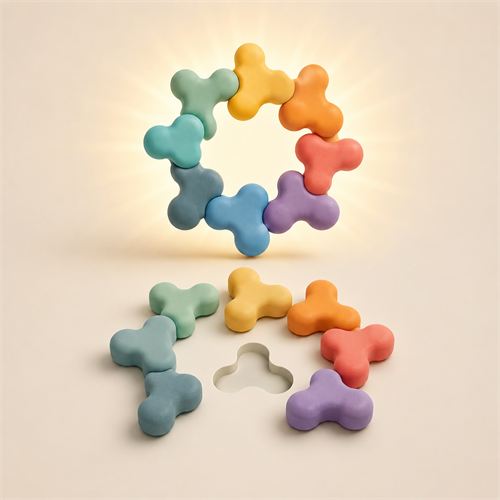
A whole depends on every essential part being present.
Popularity
Usefulness
Aliases
Complete-set principle / all-or-nothing combination effect
Domains
Management, teamwork, systems thinking, biology analogy
Definition
- The Amino acid combination effect borrows from biology: just as the body cannot synthesize protein if even one essential amino acid is missing, a system delivers its full result only when every necessary element is present together.
Core Idea
- A whole depends on every essential part being present.
- If one required element is missing, the rest cannot combine to full effect.
- Completeness and timing of the set matter, not just the quantity of each part.
How It Works
- Each essential element plays a non-substitutable role.
- A single missing element blocks the combined outcome.
- Supplying all the needed elements together unlocks the full result.
Usage Example
- A project needs design, engineering, marketing, and funding present together; missing any one, the others cannot combine into a successful launch.
Famous Example
- Example: The biological fact that all essential amino acids must be available together for the body to build protein.
- Why it fits this rule: One missing amino acid halts synthesis despite the others.
Use Cases / Situations Where It Applies
- Ensuring all critical components of a plan are in place.
- Resource and capability completeness.
- Coordinating interdependent elements.
When Not to Use or Common Misuse
- Do not treat every element as equally essential; some are substitutable.
- Do not over-apply the all-or-nothing logic where partial results are possible.
- Do not ignore sequencing and timing.
Rule Invention / Origin
- Invented by: Management framing of a nutritional-biology fact.
- Year of invention: Modern.
- Country / context of origin: Popular management literature.
Evidence / Research Basis
- The amino-acid biology is established science; the organizational lesson is analogical.
