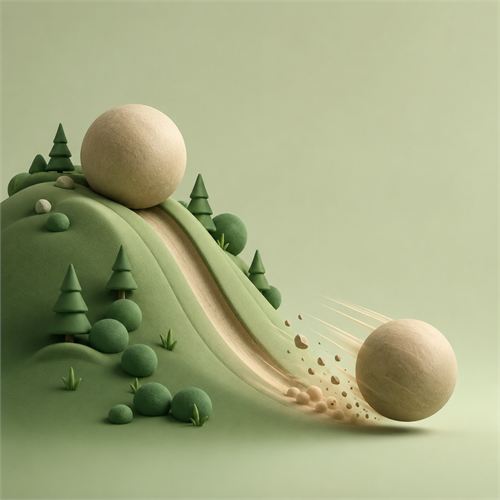
Psychology / Environment / Behavior
Psychology / Environment / BehaviorEnvironment Is Gaining Momentum
Environment exerts a cumulative, shaping force on behavior.
Popularity
Usefulness
Aliases
Environment-builds-momentum effect / situational priming effect
Domains
Psychology, environment, behavior, management
Definition
- This principle holds that the surrounding environment quietly builds up and shapes behavior — the setting "gains momentum" that primes people to act in certain ways, often without their awareness.
Core Idea
- Environment exerts a cumulative, shaping force on behavior.
- The setting primes responses before any conscious decision.
- Designing the environment is a powerful way to influence behavior.
How It Works
- Environmental cues accumulate and prime a person's mindset.
- This stored "momentum" tilts subsequent behavior in a particular direction.
- Because it operates beneath awareness, people attribute their actions to choice rather than setting.
Usage Example
- A workplace deliberately arranged to encourage collaboration — open layout, shared spaces — gradually shifts behavior toward cooperation, without anyone being told to cooperate.
Famous Example
- Example: Associated with experiments (cited as the psychologist Taylor's work) on how environmental conditions shape behavior.
- Why it fits this rule: It shows the environment building momentum that drives behavior.
Use Cases / Situations Where It Applies
- Environmental and workplace design.
- Behavior change and nudging.
- Culture-building.
When Not to Use or Common Misuse
- Do not overstate environment to the point of denying individual agency.
- Do not assume one environmental change reliably produces a fixed behavior.
- Do not use environmental influence manipulatively or without transparency.
Rule Invention / Origin
- Invented by: No single firmly attributed author; an environment/priming framing.
- Year of invention: Modern.
- Country / context of origin: Popular psychology and management literature.
Evidence / Research Basis
- Consistent with research on priming, situational influence, and behavioral design.
