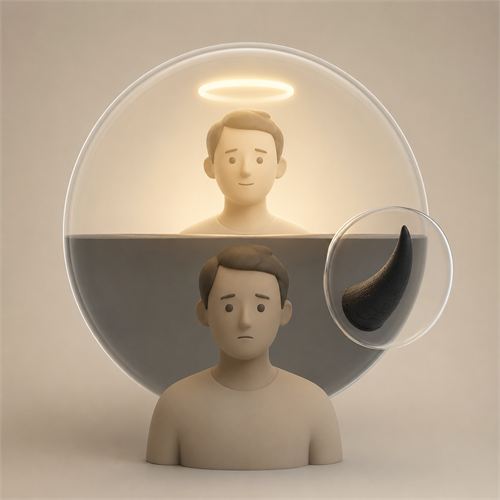
Psychology / Social / Behavioral Science
Psychology / Social / Behavioral ScienceHorn Effect
A single bad feature can spread a negative shadow over unrelated qualities.
Popularity
Usefulness
Aliases
Devil effect / reverse halo effect / negative halo
Domains
Social psychology, hiring, performance appraisal, interpersonal perception
Definition
- The Horn Effect is the tendency for one negative trait or impression to darken our overall judgment of a person or thing — the mirror image of the halo effect.
Core Idea
- A single bad feature can spread a negative shadow over unrelated qualities.
- One flaw makes everything else look worse than it is.
- Fair judgment requires evaluating each trait on its own evidence.
How It Works
- A salient negative cue creates an initial bad impression.
- That impression generalizes to other, unrelated attributes.
- The observer interprets ambiguous information in line with the negative bias.
Usage Example
- An interviewer who dislikes a candidate's untidy handwriting unconsciously rates their competence and reliability lower, despite no real link.
Famous Example
- Example: Research on the halo effect (Thorndike) also documents its negative counterpart in trait ratings.
- Why it fits this rule: One negative attribute pulled down ratings of independent traits.
Use Cases / Situations Where It Applies
- Reducing bias in interviews and appraisals.
- Recognizing when one flaw is distorting overall judgment.
- Designing structured evaluation criteria.
When Not to Use or Common Misuse
- Do not assume every negative impression is unjustified bias.
- Do not ignore genuinely disqualifying flaws.
- Do not use it to excuse poor performance.
Rule Invention / Origin
- Invented by: Stems from Edward Thorndike's halo-effect research.
- Year of invention: Early 20th century.
- Country / context of origin: United States psychology.
Evidence / Research Basis
- Impression-formation studies show negative traits disproportionately influence overall evaluations (negativity bias).
