Psychology / Systems / Decision-Making
Psychology / Systems / Decision-MakingMaximum Temperature Effect
Peak effect lags behind peak cause.
Popularity
Usefulness
Aliases
Peak-temperature effect / lag effect
Domains
Psychology, systems, management, decision-making
Definition
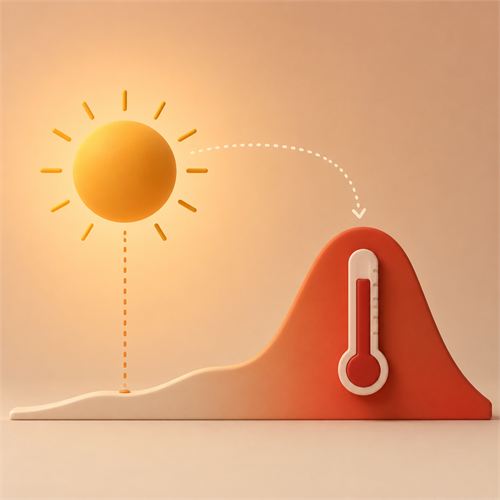
- The Maximum Temperature Effect describes a lag between cause and peak result: just as the hottest part of the day comes after the sun's peak, the greatest effect of an action often arrives after its driving force has already passed.
Core Idea
- Peak effect lags behind peak cause.
- The strongest result may come after the input has waned.
- Misjudging this lag leads to wrong conclusions about cause and effect.
How It Works
- The day is hottest around 2 p.m., even though the sun's strongest position was earlier — because heat accumulates and releases with a delay.
- Similarly, the full effect of an effort builds and peaks after the effort itself.
- Mistaking the moment of peak input for the moment of peak effect distorts judgment.
Usage Example
- A company sees results from a marketing push peak weeks after the campaign ends — and avoids the error of concluding the campaign "failed" when early numbers were modest.
Famous Example
- Example: The familiar fact that the hottest time of day lags behind the sun's peak height.
- Why it fits this rule: It is the natural illustration of effect lagging cause.
Use Cases / Situations Where It Applies
- Understanding cause-and-effect lags.
- Evaluating delayed results (marketing, training, change).
- Patience in judging outcomes.
When Not to Use or Common Misuse
- Do not assume every effect lags; some are immediate.
- Do not use "it will pay off later" to excuse genuinely failed efforts.
- Do not ignore the lag and judge outcomes prematurely.
Rule Invention / Origin
- Invented by: No single attributed author; a metaphor from thermal lag.
- Year of invention: Modern.
- Country / context of origin: Popular management and psychology literature.
Evidence / Research Basis
- Grounded in the physics of thermal lag; applied by analogy to delayed effects.
