Psychology / Social / Behavioral Science
Psychology / Social / Behavioral ScienceWhat-Is-Beautiful-Is-Good Effect
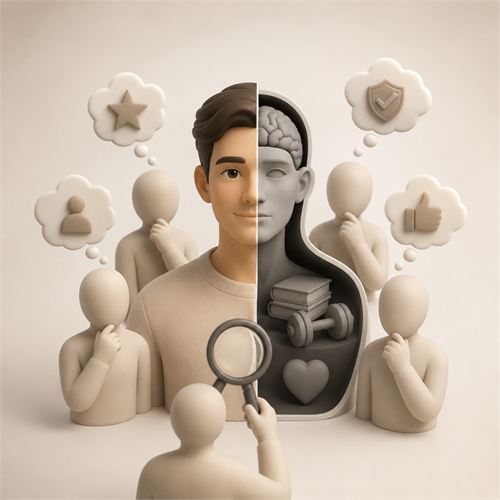
Attractiveness acts as a halo that spills over onto traits it has nothing to do with.
Popularity
Usefulness
Aliases
Physical attractiveness stereotype / beauty-is-good bias / halo of beauty
Domains
Social psychology, hiring, marketing, interpersonal perception, media
Definition
- The What-Is-Beautiful-Is-Good Effect is the tendency to assume that physically attractive people also possess other positive, unrelated qualities such as intelligence, kindness, or competence.
Core Idea
- Attractiveness acts as a halo that spills over onto traits it has nothing to do with.
- People infer inner goodness from outer appearance, often without realizing it.
- The bias can unfairly advantage attractive people and disadvantage others.
How It Works
- An attractive face triggers an immediate positive impression.
- That positive feeling generalizes to judgments about character and ability.
- Because the inference feels intuitive, observers rarely question it.
Usage Example
- In hiring, two equally qualified candidates are rated differently because the more attractive one is unconsciously assumed to be more capable and sociable.
Famous Example
- Example: Dion, Berscheid, and Walster's 1972 study "What Is Beautiful Is Good."
- Why it fits this rule: Participants attributed more desirable personalities and better life outcomes to attractive people based on photos alone.
Use Cases / Situations Where It Applies
- Recognizing appearance bias in hiring, grading, and evaluation.
- Designing fairer, structured assessment to counter it.
- Understanding why marketing uses attractive spokespeople.
When Not to Use or Common Misuse
- Do not treat attractiveness as evidence of competence or honesty.
- Do not assume the effect is universal or large in every setting.
- Do not use it to justify appearance-based discrimination.
Rule Invention / Origin
- Invented by: Karen Dion, Ellen Berscheid, and Elaine Walster.
- Year of invention: 1972.
- Country / context of origin: United States social psychology.
Evidence / Research Basis
- Numerous studies confirm attractive individuals are rated more favorably on unrelated traits, an example of the halo effect.
- The bias appears in hiring, judicial, and academic judgments, though effect sizes are moderate.
