Management / Organizational Behavior
Management / Organizational BehaviorWine and Sewage Law
A single harmful person or factor can spoil an otherwise good team.
Popularity
Usefulness
Aliases
Wine and sewage principle / bad-apple law / spoiler effect
Domains
Management, team dynamics, organizational behavior, leadership
Definition
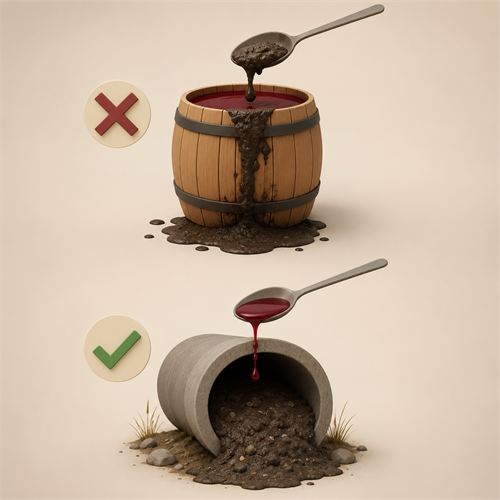
- The Wine and Sewage Law states that a spoonful of sewage ruins a barrel of wine, but a spoonful of wine cannot redeem a barrel of sewage — destructive elements have outsized, one-directional power.
Core Idea
- A single harmful person or factor can spoil an otherwise good team.
- Good cannot easily offset bad; the damage runs one way.
- Deal with the destructive element early and decisively.
How It Works
- A toxic member's behavior degrades trust, morale, and standards around them.
- The good majority cannot simply "absorb" or fix the toxic influence.
- Left unchecked, the contamination spreads through the whole group.
Usage Example
- One chronically negative, undermining employee can drag down a strong team's morale and output far more than a single excellent hire can lift a dysfunctional one.
Famous Example
- Example: The management adage contrasting wine and sewage to argue for removing destructive members.
- Why it fits this rule: It illustrates the asymmetric power of harm versus good.
Use Cases / Situations Where It Applies
- Addressing toxic team members promptly.
- Protecting culture and standards.
- Hiring and retention decisions.
When Not to Use or Common Misuse
- Do not label every difficult person as "sewage"; distinguish toxic behavior from healthy dissent.
- Do not use it to justify hasty firing without fairness.
- Do not ignore systemic causes of bad behavior.
Rule Invention / Origin
- Invented by: Popular management law; no single attributed author.
- Year of invention: Modern management writing.
- Country / context of origin: Western management literature.
Evidence / Research Basis
- Research on toxic employees and negative-member effects supports the asymmetric harm idea.
